
Spatial design · NOV 2026
How to Hide Dog Bowls, Leads and Pet Clutter Without Hiding Your Pet
A practical five-step method for giving food bags, leads, bowls and care supplies a closed architectural home while keeping what your animal needs freely reachable.
- Type
- Guide
- Published
- NOV 2026
- Updated
- November 2026
- Reading time
- 7 min
- Topics
- Pet storageHome integrationClutterFeeding zoneEntryway
Ask most homeowners what makes a living space feel restless when they share it with an animal, and the answer is almost never the animal itself. It is the accumulation of loose gear: mismatched bowls on the kitchen floor, a 10 kg kibble bag slumped beside the pantry, leads looped over the front door handle, toys scattered under the sofa, grooming brushes on the laundry bench, and boxes of flea treatments left out so nobody forgets the next dose.
Over fifteen years of residential architecture work, HĀM Studio founder George heard the same apologetic line in house after house: "Sorry about the mess, that's the dog's stuff." Nobody was apologising for their companion. They were apologising for floor plans that never gave companion routines an architectural address.
The goal is never to hide the animal. The goal is to house every accessory right where it is used, behind calm joinery fronts, while keeping the essentials your pet depends on effortlessly accessible.
Direct answer
To hide pet clutter cleanly without adding visual noise, sort every pet item into five daily routines (feeding, food stock, walking, grooming care and spare comfort items), place closed storage one step from each point of use, and consolidate those compartments into furniture the room already needs such as a credenza, entryway bench or media console. Keep three essentials permanently open: drinking water, the resting bay and any feline escape route.
Step 1: Take an honest five-group inventory
Before buying baskets or planning a pet storage cabinet, list every animal-related item currently floating around the house. Almost every household's gear falls cleanly into five routine groups:
| Routine group | Typical items | Frequency of use | Ideal architectural home |
|---|---|---|---|
| Feeding | Food bowls, water bowl, scoop | Several times daily | Recessed feeding bay or open water niche |
| Food stock | Dry kibble, wet tins, daily treats | Daily | Airtight sealed bin inside a closed cabinet next to bowls |
| Walking gear | Leads, harnesses, collars, bags, paw towel | Daily | Shallow entry drawer and concealed rail at hand height |
| Care & health | Brushes, nail clippers, shampoo, medications | Weekly to monthly | Closed upper drawer or cupboard beyond animal reach |
| Comfort & play | Toy rotation, spare cushion covers, travel mat | Weekly / seasonal | Deep lower drawer beside the main resting zone |
Frequency dictates location. Daily items fail when stored in a hallway cupboard two rooms away because convenience always wins over good intentions. Monthly items, by contrast, never need prime living-room counter space.
Step 2: Decide clearly what must stay open
Tidiness should never work against animal welfare. Before putting doors on anything, lock in three non-negotiables that must always remain open and unobstructed:
- Drinking water: Never seal a water bowl inside a closing drawer or behind a latched cabinet door. Frame water inside an open niche or wipe-clean recessed bay so it stays calm visually yet reachable at 3 a.m.
- The resting place: A companion den should act as a voluntary refuge with open entry and generous passive airflow, never a shut box.
- For cats, clear exits: Any enclosed litter zone or elevated perch needs unblocked sightlines and an exit route the cat trusts completely.
Everything else (kibble bags, canned food, leads, dirty towels, grooming brushes, medications and spare textiles) belongs behind clean closed fronts.
Step 3: Place closed storage at each point of use
At the feeding station
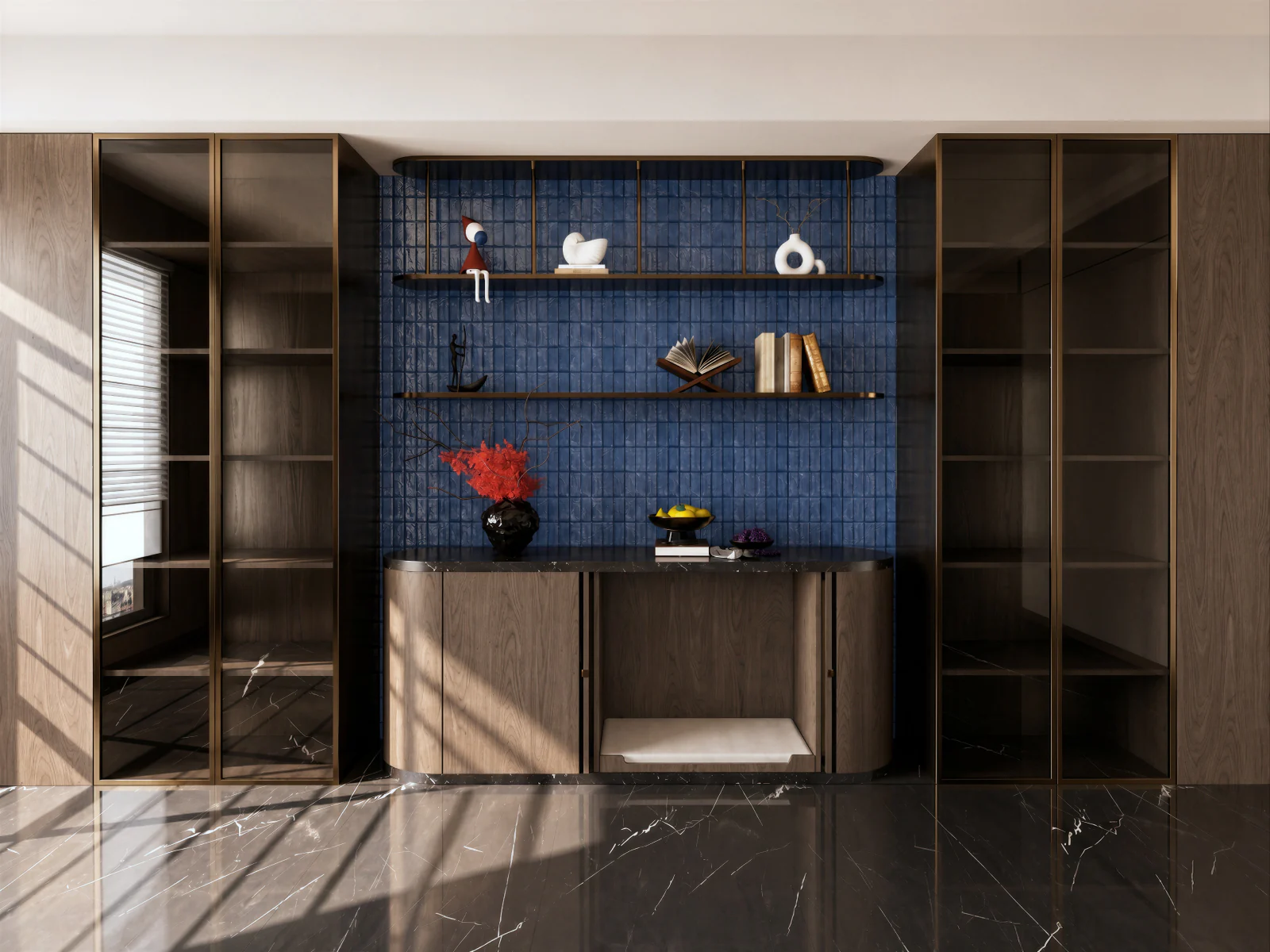
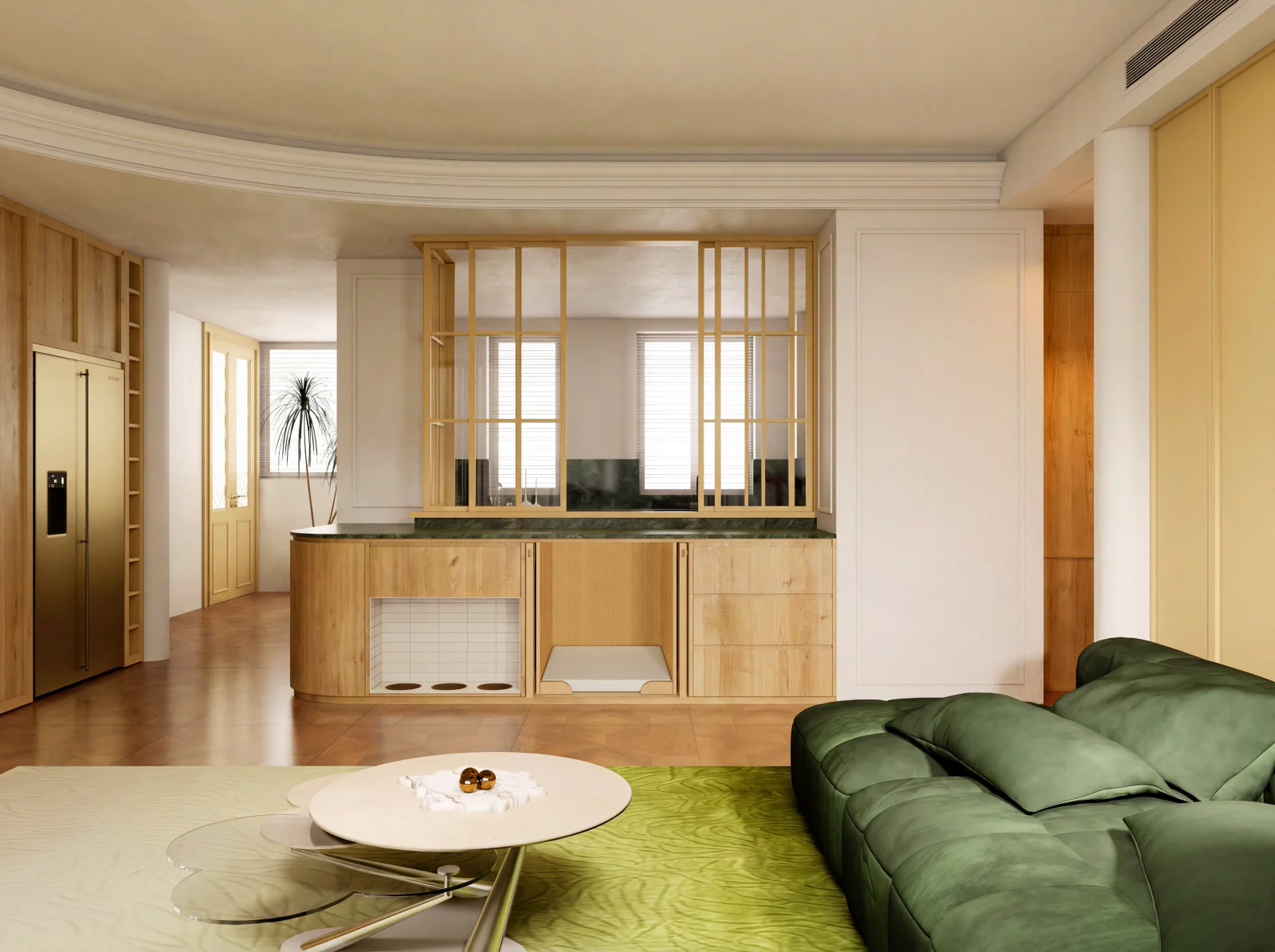
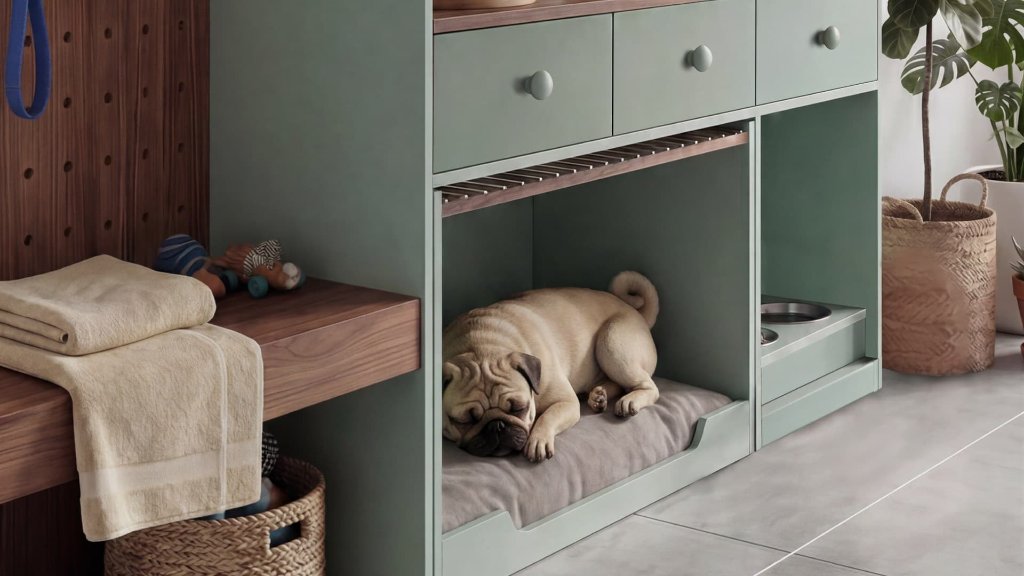
Bowls are the hardest item to disguise because they stay in constant rotation. Framing works far better than hiding: detail a tiled or stone-lined feeding niche at the quiet end of a dining credenza, or pair a stable pull-out drawer for mealtime food bowls with a fixed open water niche beside it. Directly above or adjacent, dedicate one deep sealed drawer to an airtight kibble bin so scooping takes two seconds without hauling a crinkled plastic sack across the floor.
For exact layout rules, splash protection and bowl-height safety, see where to put dog bowls in an open-plan kitchen and the geometry of feeding.
At the front door and mudroom
Leads migrate onto door handles simply because that is where walks begin. Give them a deliberate station on the exact same wall: a recessed rail or pegs inside a slim tall cupboard at 1,100 to 1,300 mm height, a shallow drawer directly underneath for waste bags, torch and training treats, and a ventilated lower shelf or pull-out bin for damp paw towels. Keep treats and topical medications above nose height behind a firm latch.
The complete four-stage arrival sequence (contain, dry, settle, store) is mapped in the pet entry.
Beside the living-room resting bay
Spare cushion covers, throws and half the household's toys can live inside a single deep drawer adjacent to the resting bay. Rotating three or four toys out each week while storing the rest behind a clean drawer front eliminates floor clutter and actually keeps toys more stimulating for dogs.
Care, grooming and medications
Brushes, ear wipes, clippers and parasite treatments look messy on bathroom counters and pose safety risks if chewed. Group them inside a labelled inner tray within an upper cabinet drawer above pet reach. Avoid low push-to-open spring latches near food or treat drawers, as persistent dogs quickly learn to nose them open; recessed pulls or elevated catches solve that quietly.
The cat litter zone
In cat-owning homes, the litter tray is the largest source of visual clutter and odour, and also the easiest zone to ruin through over-concealment. Tight boxes with tiny flap doors trap ammonia and cause litter avoidance. Before planning a litter box cabinet or enclosure, read our architectural breakdown on hidden litter box furniture design covering cross-ventilation, odour pathways and scoop clearance.
Step 4: Consolidate into one piece the room already needs
Buying separate storage tubs, woven toy baskets and plastic kibble bins rarely makes a room feel peaceful. Each product introduces another texture, colour and lid; loose clutter simply turns into organised clutter.
The lasting architectural move is consolidation: absorbing resting, feeding and closed care storage into one piece of furniture you already need for the room. Real examples from the HĀM Studio archive show how much visual noise disappears when routines share one volume:
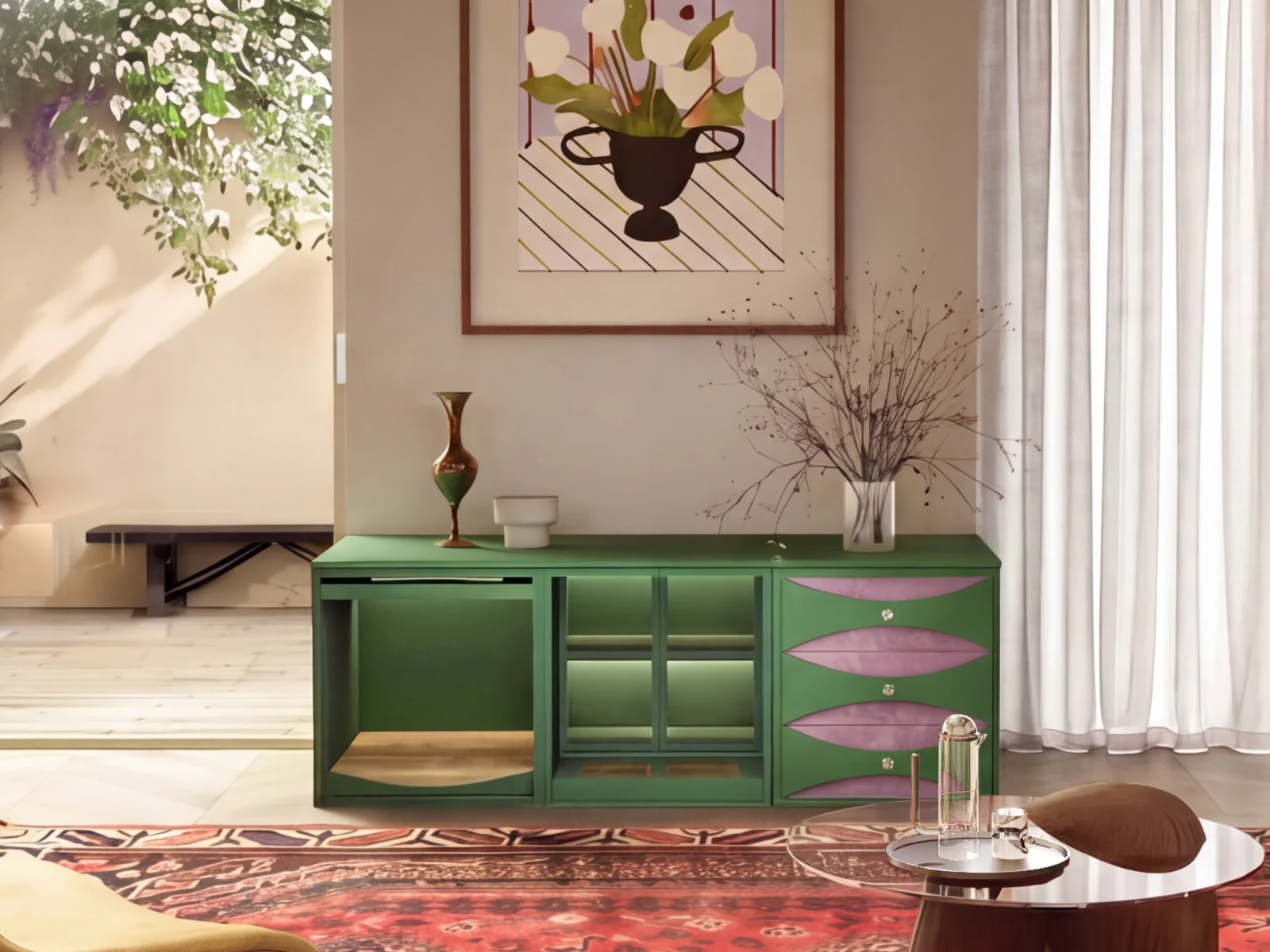
- The Verdant Care Credenza combines a calm living-room sideboard silhouette with a sheltered resting bay, a wipe-clean feeding alcove and a bank of closed drawers for food and grooming supplies.
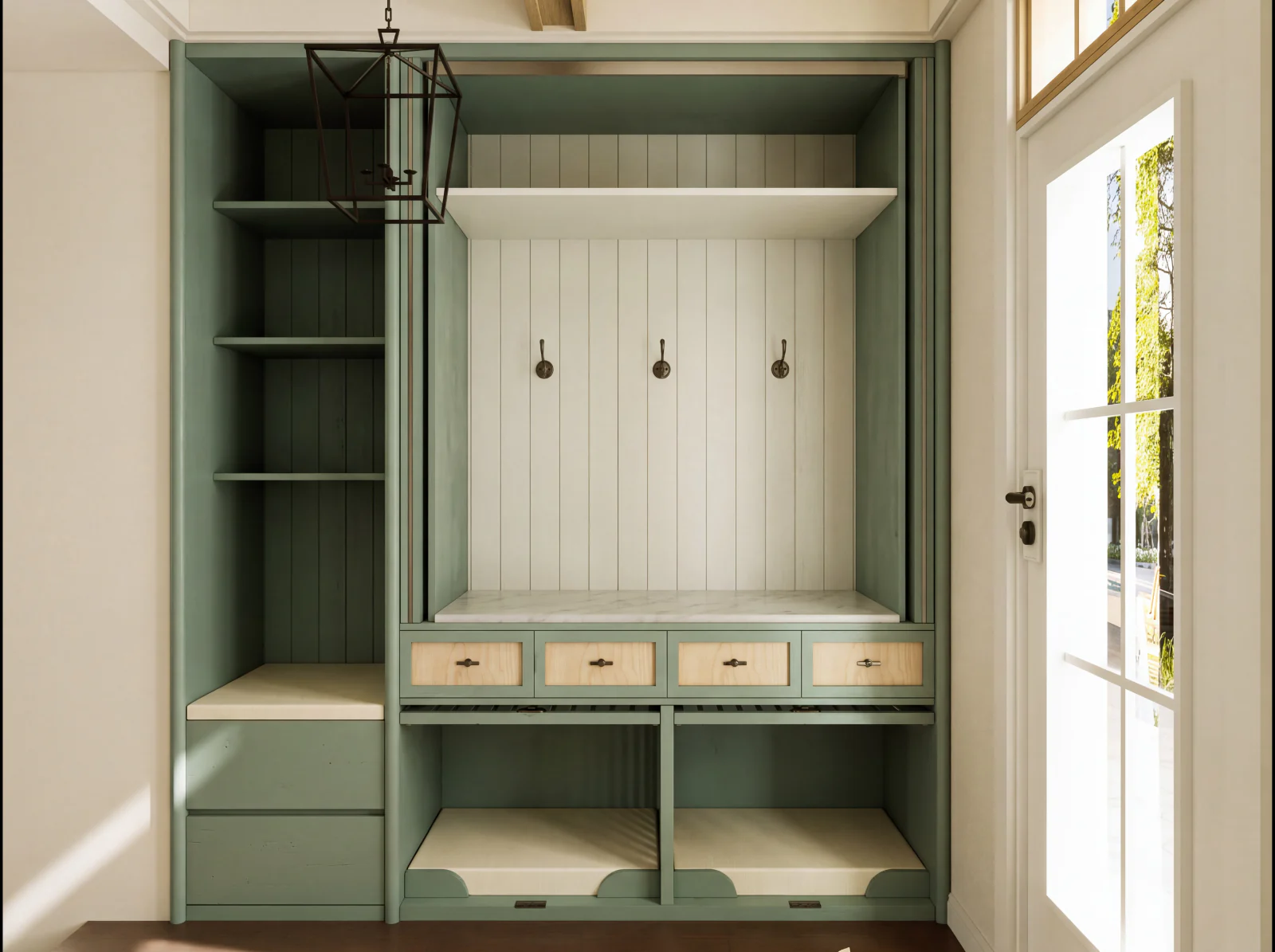
- The Den & Sofa Suite unites seating, an integrated den cabinet, a recessed feeding station and closed upper supply storage into a single living-room composition.
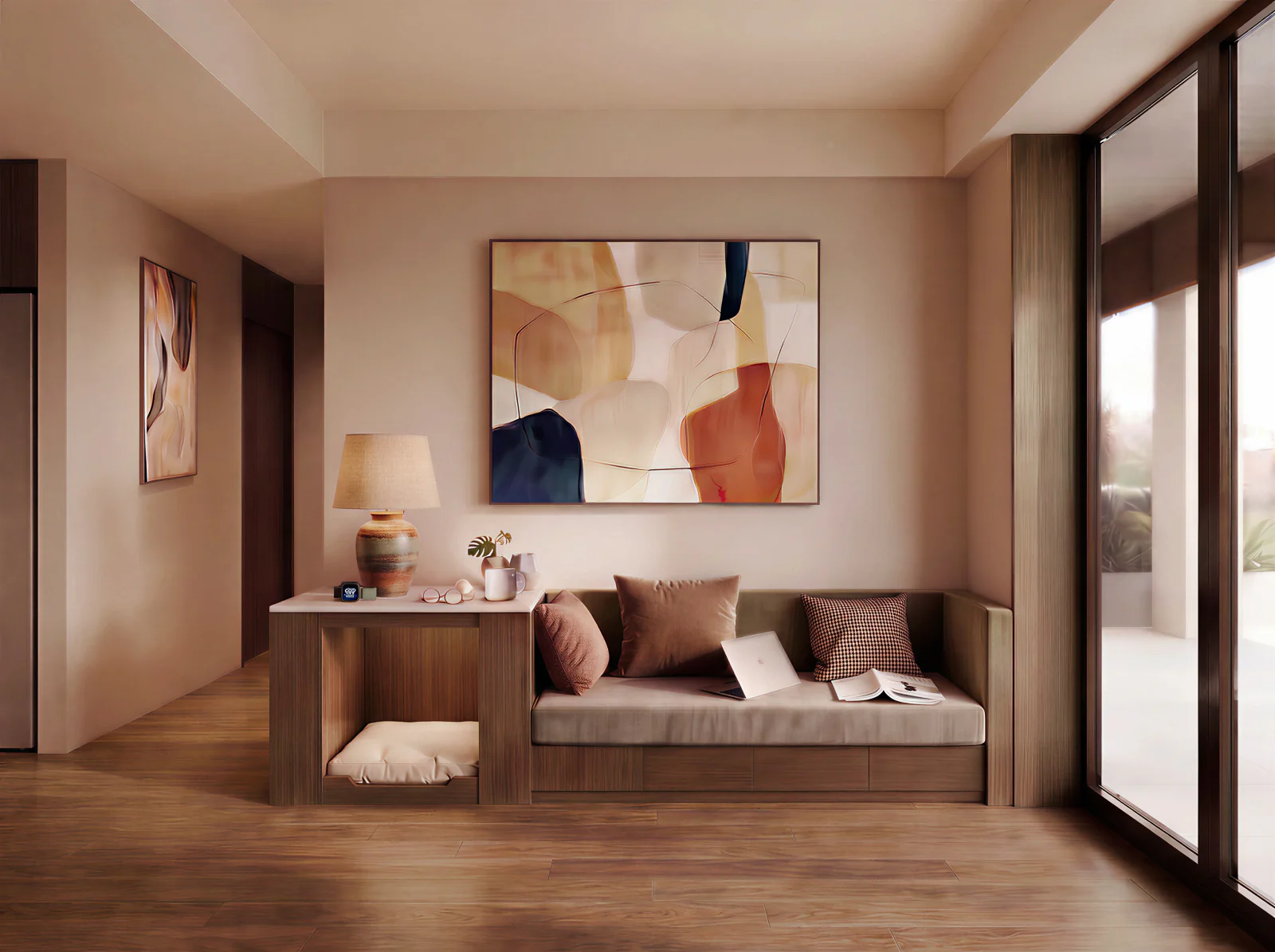
- The Sage Mudroom Wall gathers twin ground-level resting alcoves, deep care drawers, a bench and tall closed shelving along one hallway wall.
We examine why standalone retail accessories break down in considered interiors in why most pet furniture fails beautiful homes. If your main eyesore is also a metal living-room crate, explore our dog crate furniture guide for Australian homes and small-apartment dog furniture ideas.
Materials and hardware built for food, water and claws
Pet storage cabinetry works harder than an ordinary hallway sideboard. Kibble oils, damp towels, daily wiping and curious noses demand three practical specification standards:
- Moisture-sealed edges and wipeable interiors: Architectural-grade low-emission (E0) engineered panels with concealed edge banding resist claws, humidity shifts and daily cleaning far better than unstabilised boards.
- Ventilation for damp gear: Any compartment storing wet walk towels, raincoats or litter trays needs discreet passive airflow slots so moisture never lingers inside closed cabinetry.
- Low-VOC, hygienic contact surfaces: Finishes, adhesives and edge sealants should meet low-emission standards, with high-touch laminates specified for easy sanitising (HĀM material partners supply certified boards and laminates tested to ISO 22196). Full technical criteria are set out in specifying pet-safe finishes and materials.
Your five-step decluttering blueprint
- Inventory every pet item in the house and assign it to one of the five routine groups.
- Protect open access for water, the resting bay and any feline escape routes.
- Locate closed storage within one step of where each routine actually happens.
- Secure food and medications in airtight containers inside closed compartments above dog height.
- Consolidate into one freestanding architectural piece that fits your room and moves with you if you relocate.
A home can look spotless in photographs and still fail its animals if water is shut away or a resting bay feels trapped. Starting every storage decision from what the animal must easily reach ensures the finished room feels calm for both species.
Ready to replace five loose pet products with one calm piece? Send one everyday phone photo of your room (no tidying needed) and receive a free custom room concept within three business days.
References
Sources
- 01
Pet-Safe Finishes and Materials Specification
HĀM Studio · 2026
Used for: Low-emission board, moisture-sealed edge banding and hygienic laminate standards for enclosed pet storage.
- 02
Hidden Litter Box Furniture Design
HĀM Studio · 2026
Used for: Ventilation, odour pathway and clearance requirements before enclosing feline litter trays.
- 03
Pet Entry Design: Mudrooms and Hallways
HĀM Studio · 2026
Used for: Four-stage threshold sequence for containing wet paws, leads and daily walk gear.
Scope
Limitations
- 01Storage layouts should always prioritise continuous access to fresh water, safe ventilation and unrestricted companion exits over purely visual concealment.
- 02Exact drawer depths, ventilation openings and latch hardware depend on household routines, pet breed size and available wall dimensions.
Questions
Frequently asked
Free resource
Get the Spatial Brief Checklist
A printable A4 checklist covering the measurements, photographs, and companion details needed before commissioning a pet space — the same brief HĀM uses with clients.
We'll occasionally send studio notes on companion space design. No spam, unsubscribe anytime.
Continue reading
Read next
Free 3-day room concept · Made to measure for homes worldwide
See how a made-to-measure piece fits your actual wall.
Send one phone photo of your room — no tape measure needed. Our studio will draw a free illustrated furniture concept tailored to your home and your pet within 3 business days.